
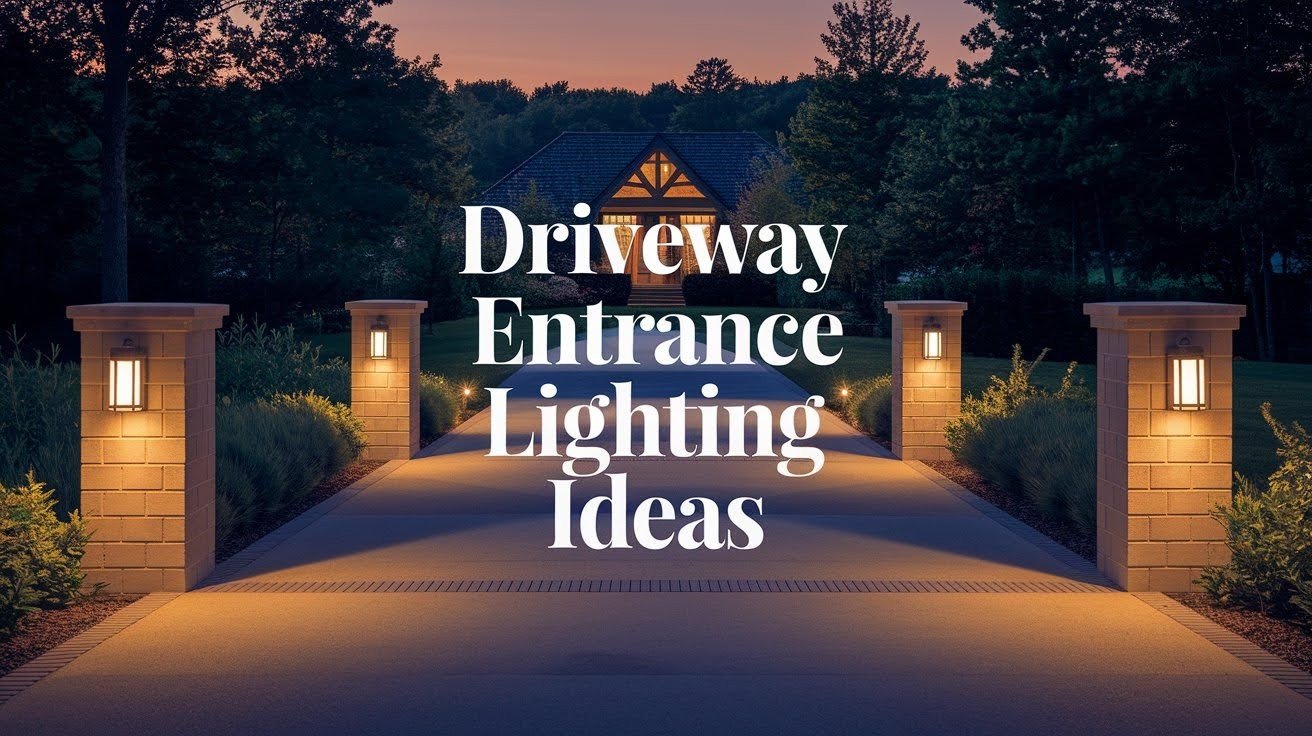
In this blog, I will share some real-world driveway entrance lighting solutions that will help you create a safe and inviting atmosphere at your home. People should not fear coming home when it is dark.
The driveway’s entrance impresses first, and good lighting makes it safe, welcoming, and appealing. See your path, avoid steps or curbs, and notice guests.
This guide will help you select the best outdoor lighting fixtures for your house. It covers wall lights, path lights, and other things for safety and seems.
Driveway Entrance Lighting Ideas
Let’s seem at some real ways to brighten your driveway entrance that work for different homes and budgets.
Wall-Mounted Solutions for Garage Driveways
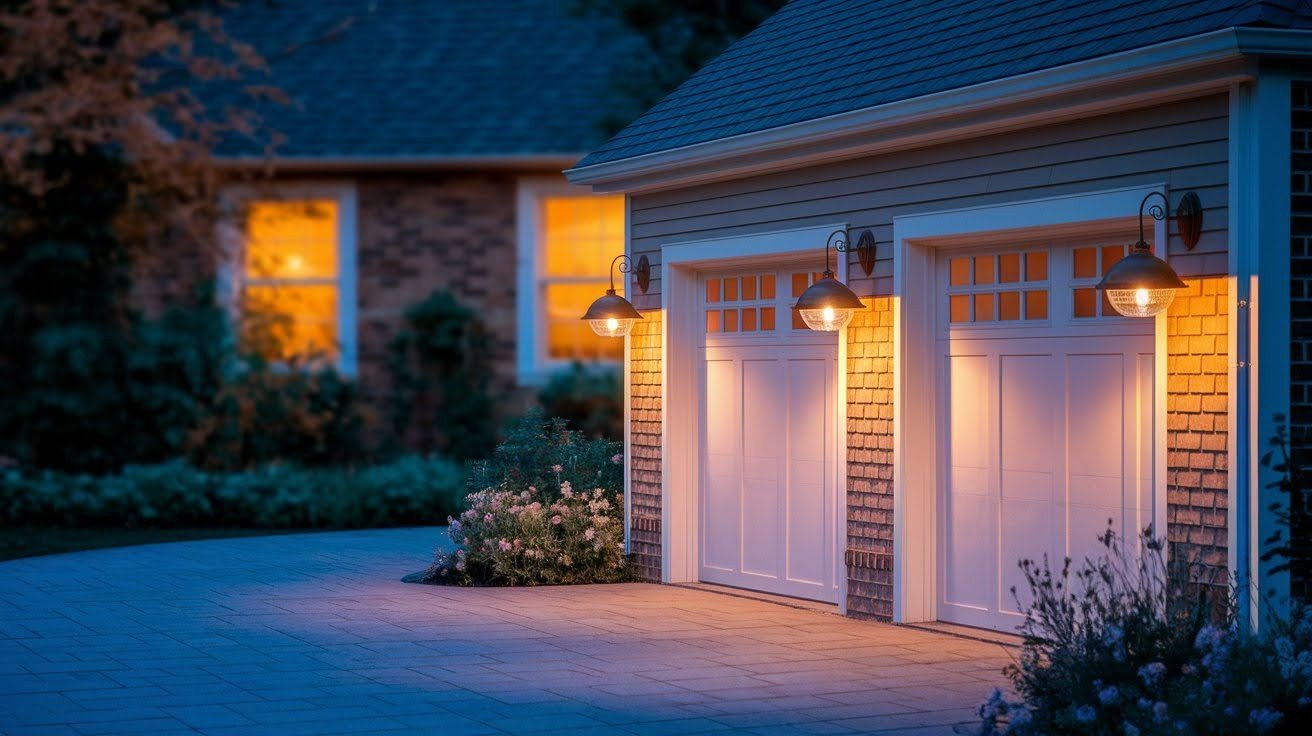
If your driveway leads to a garage, wall-mounted lights are your best friend. Farmhouse-style sconces on both sides of the garage door create a balanced, welcoming seem. These fixtures throw light down and out, covering the area where you park and walk.
Modern wood sconces, especially teak options, add warmth while standing up to weather. They work great if you want something different from standard metal fixtures. The natural wood tone softens the seem of brick or siding.
Adjustable beam angle fixtures give you control over where light falls. Point them at the driveway surface to light up the pavement, or angle them toward the garage door for a different effect.
Bollard Lighting for Driveway Edges
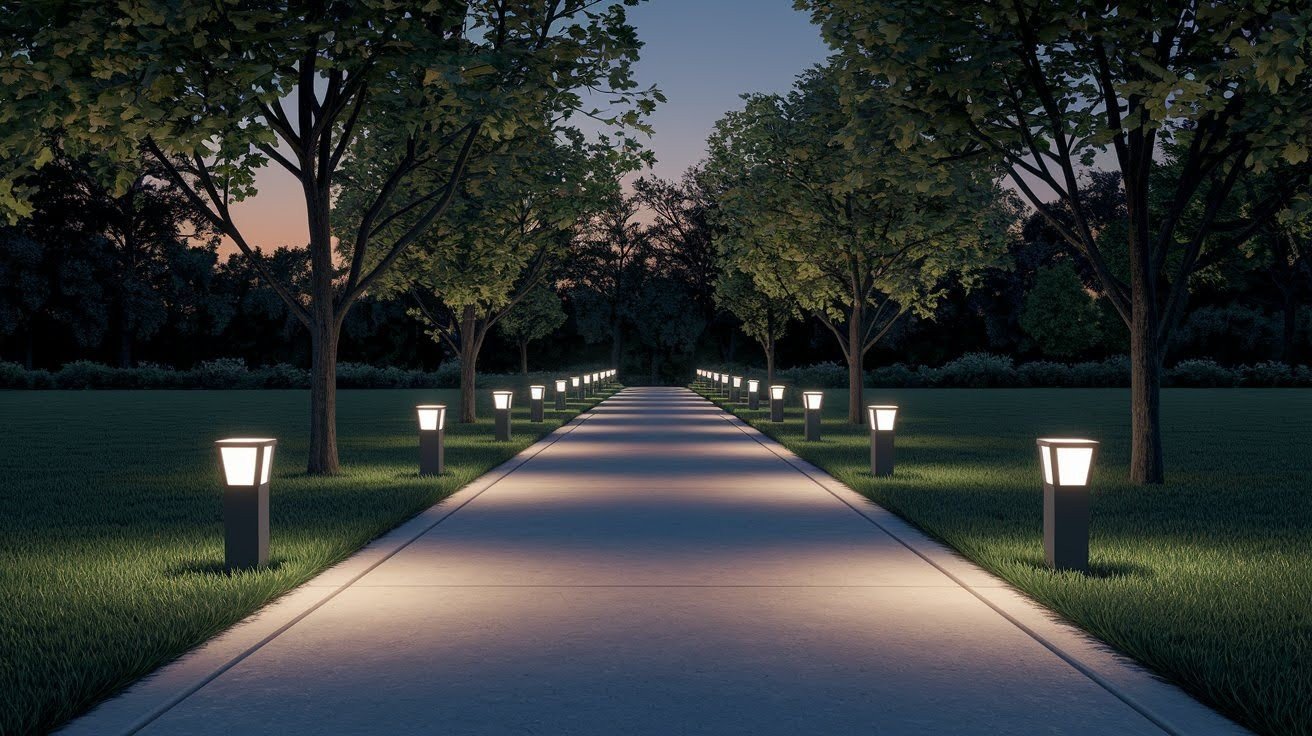
Bollards are short posts with lights inside that mark the edges of your driveway. Traditional bollard designs seem like mini lamp posts and work with most home styles. They’re sturdy enough to handle bumps from car doors and lawn equipment.
Angular architectural bollards suit modern homes with clean lines. These fixtures have geometric shapes that make a statement while doing their job. They’re usually made from aluminum or stainless steel, which lasts for years.
Flower-inspired focused bollards send light straight down in a concentrated beam. This style keeps light from spilling into your yard or your neighbor’s property. They’re perfect if you want to mark the driveway edge without lighting up everything around it.
Flexible and Movable Options
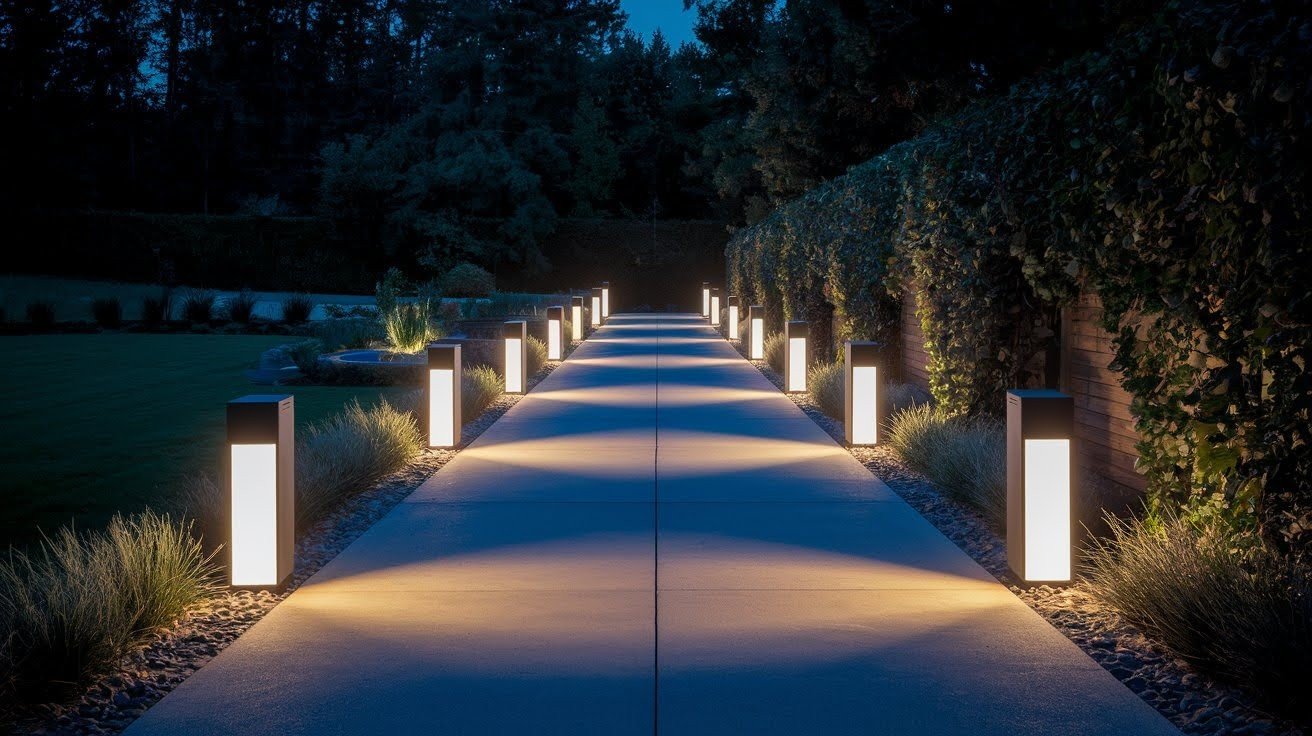
Not every lighting solution needs to be permanent. Outdoor floor lamps let you line your driveway without digging or wiring. You can move them for parties, reposition them seasonally, or take them with you if you move.
Portable lighting solutions include battery-powered or solar options that you place where needed. These work great for renters or anyone testing out driveway entrance lighting ideas before committing to permanent fixtures
The freedom to experiment means you can find what works before investing in installation. Try different positions and see how the light falls. Once you know what you like, you can decide if you want to go permanent.
Specialty Lighting Effects
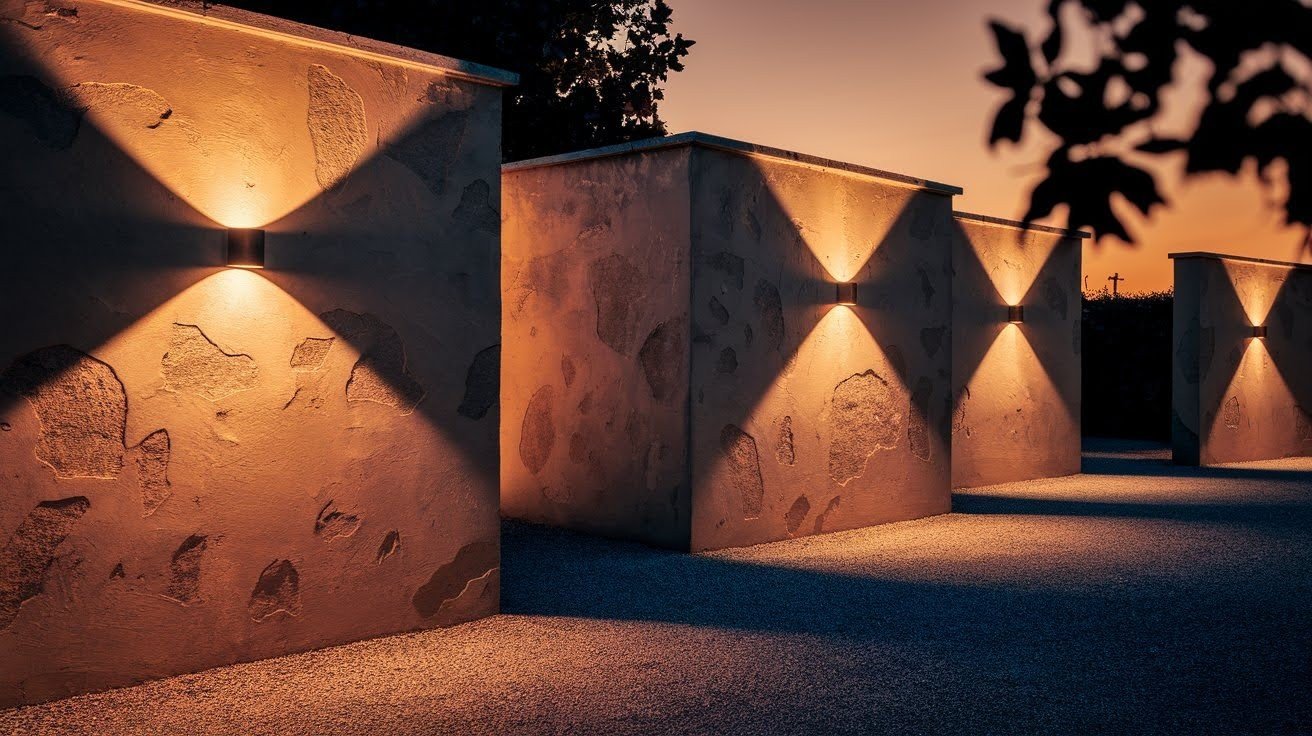
Solar eclipse wall sconces create a dramatic half-moon of light on walls. These fixtures block light from shining directly into the eyes while casting a soft glow up and down. They’re ideal next to garage doors or entry gates.
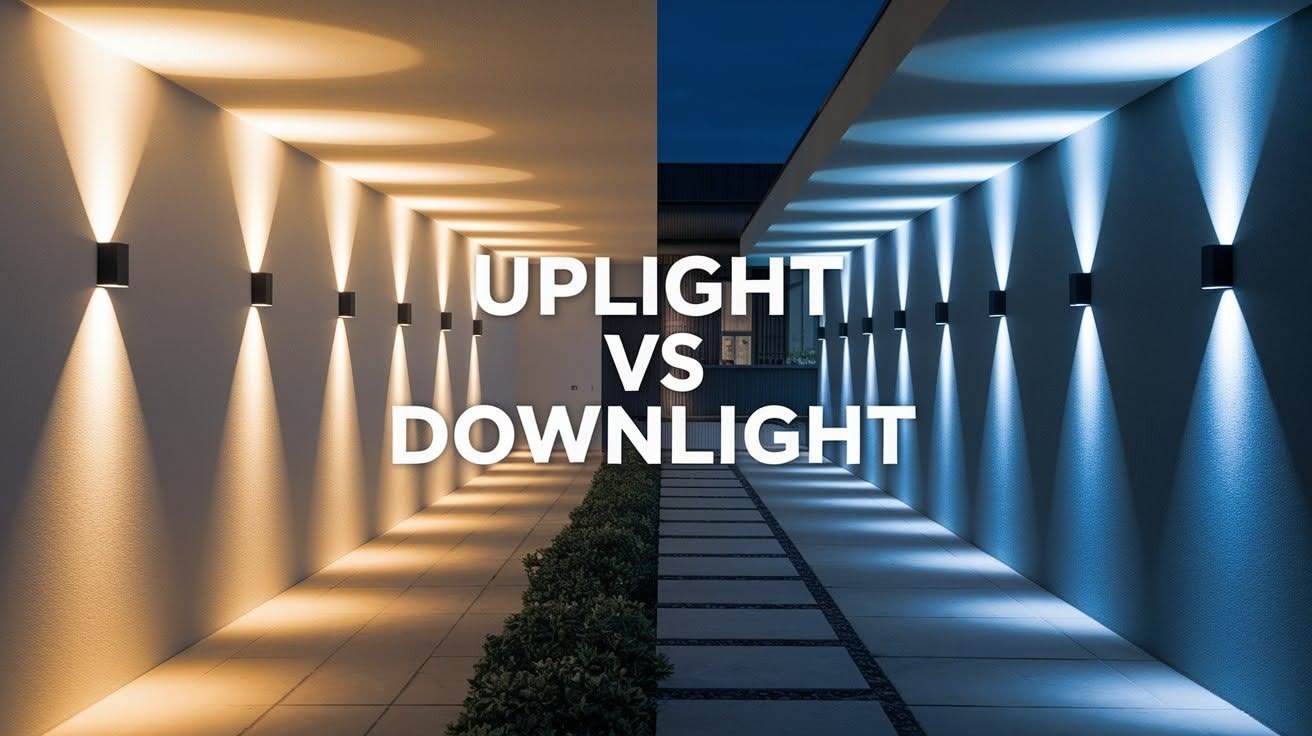
Up/down lighting fixtures send beams in both directions from a central unit. The upward light hits the wall and bounces back, while the downward beam lights the ground. This creates layers of light that feel more complete than a single beam.
These effects add visual interest to plain walls and surfaces. The patterns of light and shadow make your entrance more than just functional. They turn everyday surfaces into features that catch the eye.
Layered Lighting Approach
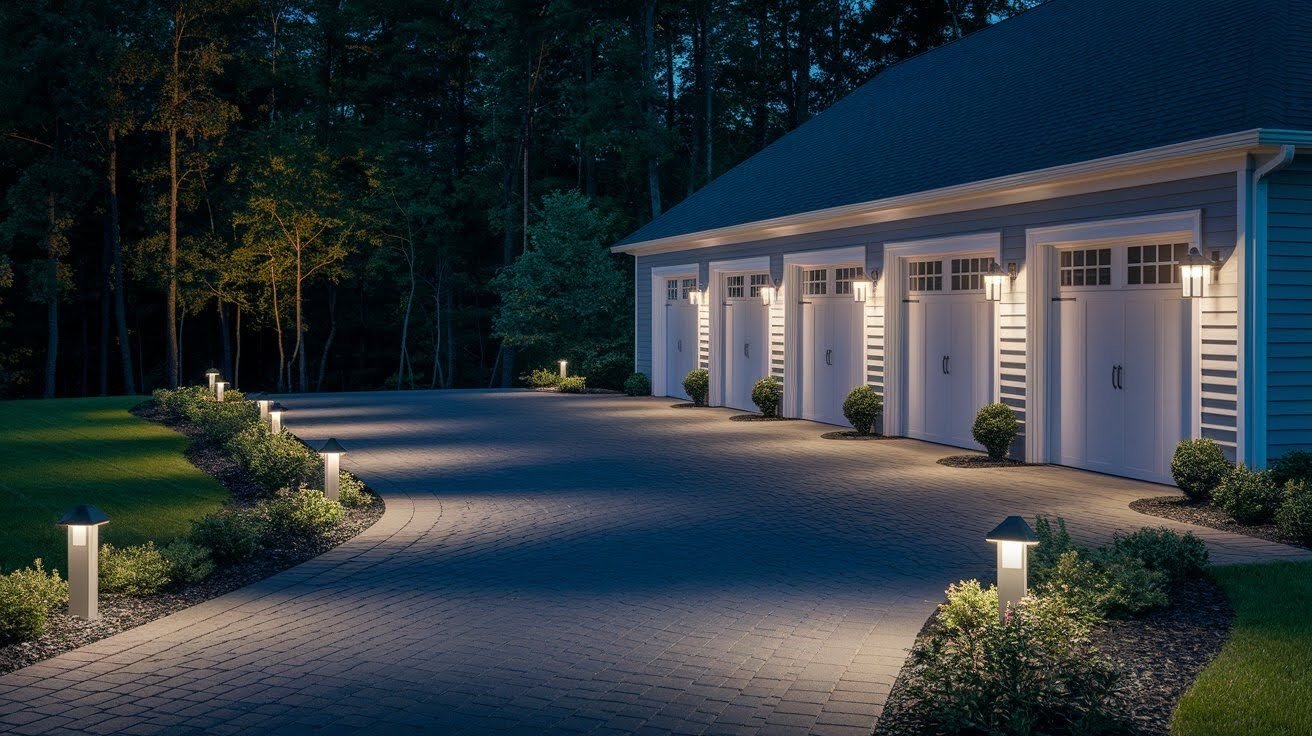
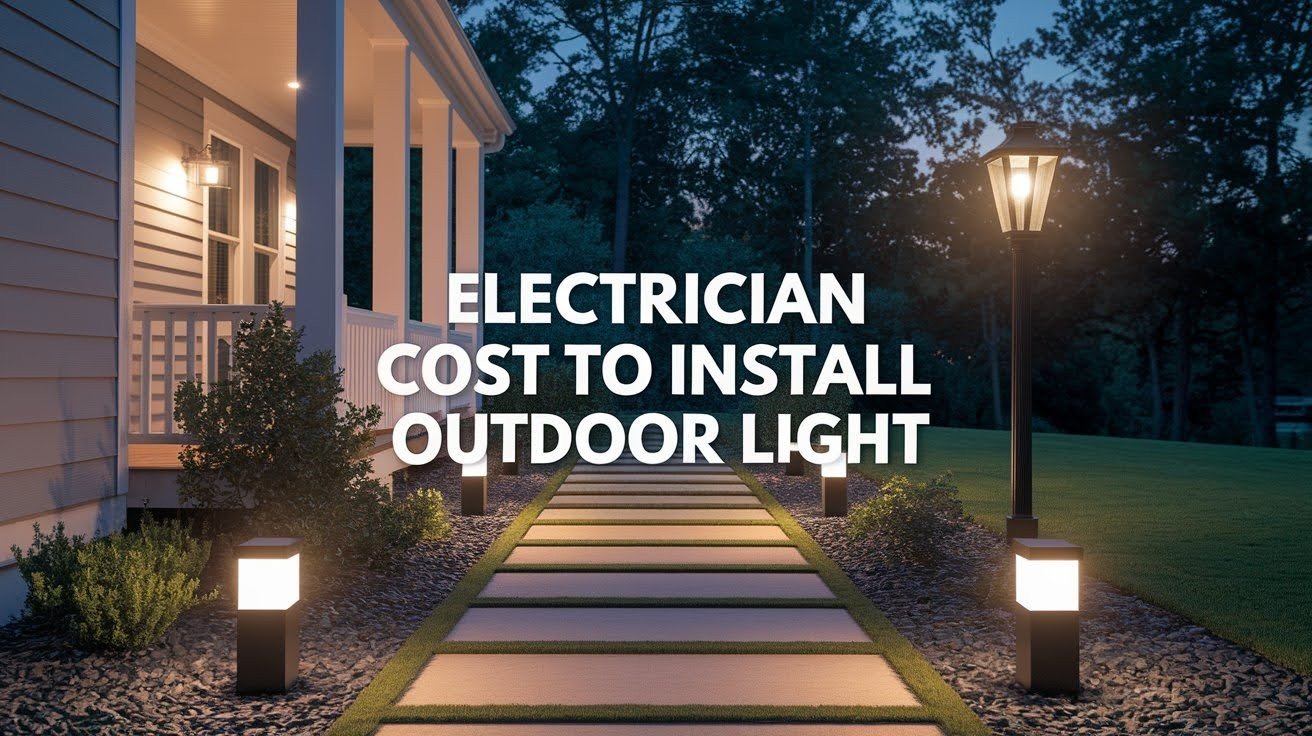
Don’t rely on just one type of light. Combining path lights with entry wall sconces gives you coverage at multiple levels. The path lights guide feet, while wall lights illuminate faces and door handles.
This combination creates what lighting designers call a “wayfinding” system. Your eyes naturally follow the lit path from street to door. It’s not just about seeing where to step, but feeling pulled toward your entry.
Start with one layer and add more over time. You might begin with wall sconces by the garage, then add bollards along the driveway edge later. Building your lighting system in stages spreads out the cost and lets you adjust as you go.
Solar-Powered Path Markers
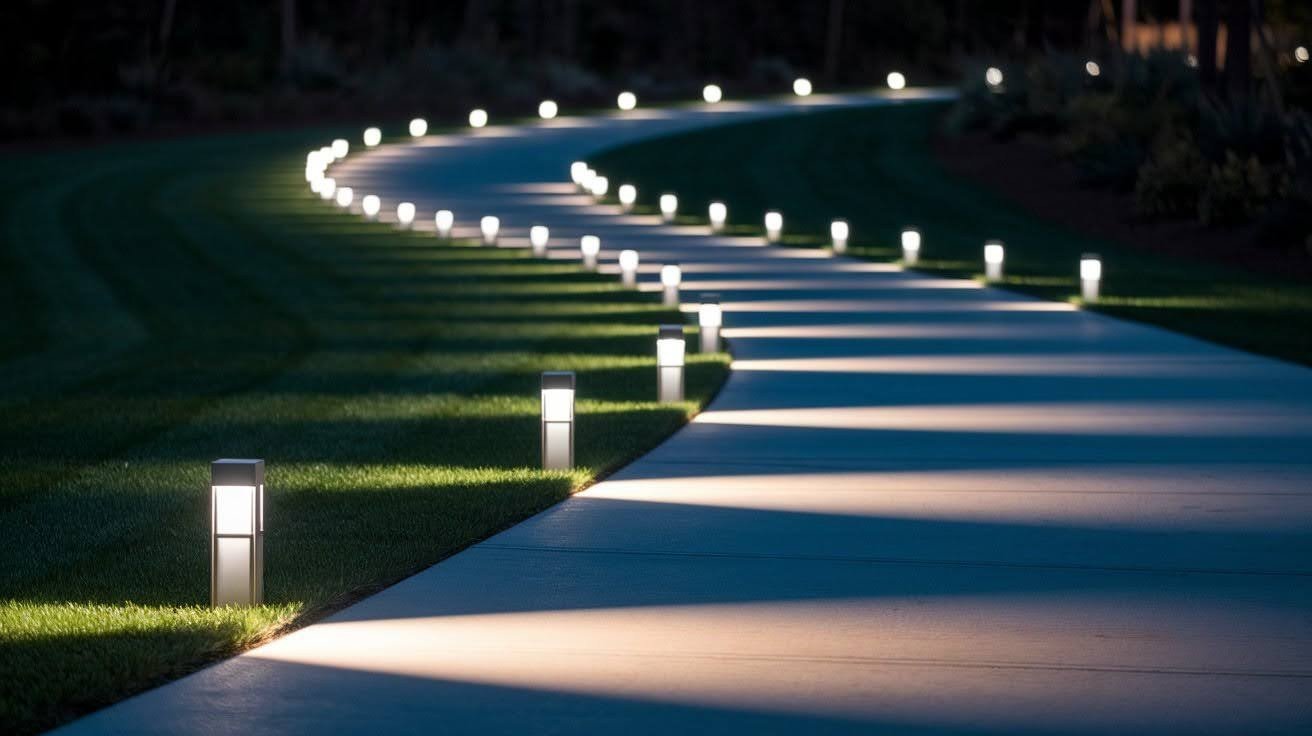
Solar path lights collect sunlight during the day and turn on automatically at dusk. These work great for driveway entrance lighting ideas when you don’t want to run electrical wires. Modern solar lights are much brighter than older versions.
Place them every six to eight feet along your driveway edge. They need direct sun during the day, so avoid shady spots. Most come with stakes that push into the ground, making installation take just minutes.
The best solar lights have replaceable batteries and adjustable heads. Look for models rated for at least 8-10 hours of light per charge. This ensures they stay lit all night, not just the first few hours after dark.
Motion-Activated Security Lights
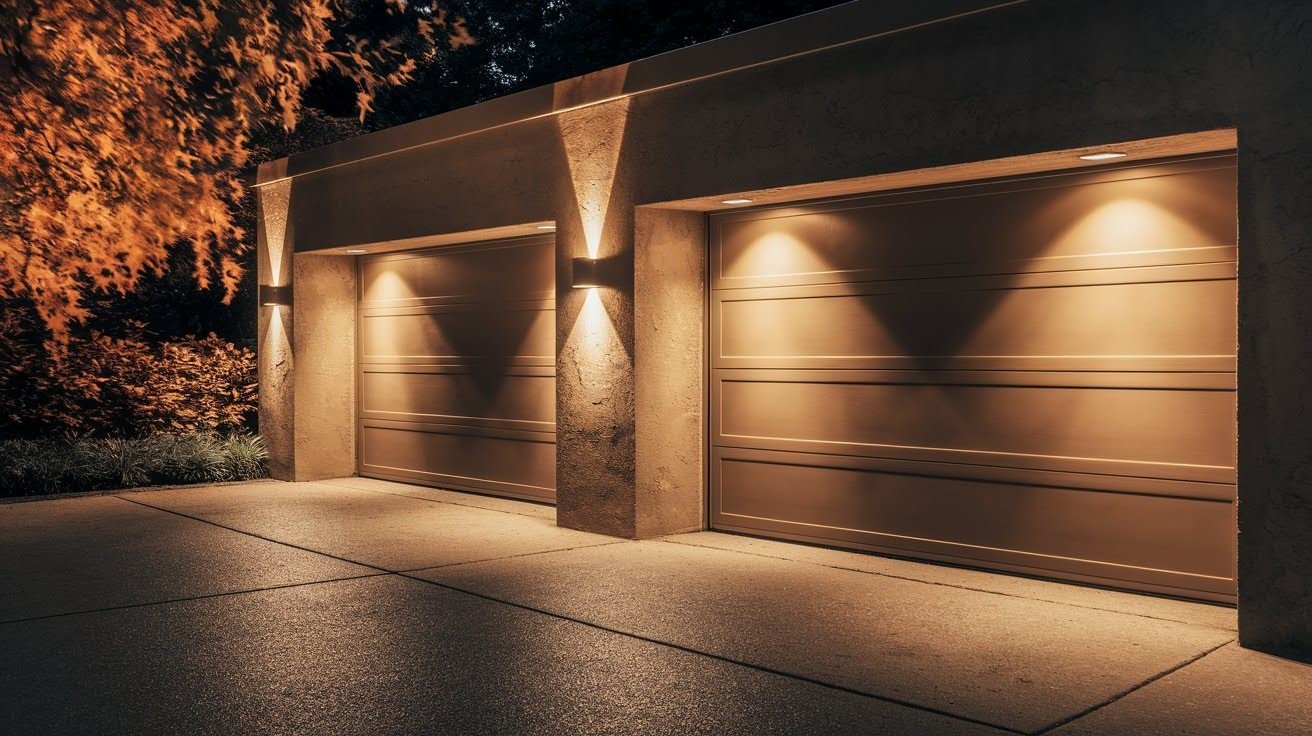
Motion sensors add a security layer to your driveway lighting. These lights stay dim or off until they detect movement, then brighten to full power. This sudden light startles intruders and alerts you to arrivals.
Position motion lights to cover the entrance from multiple angles. Set the sensitivity so they catch people and cars, not just leaves or small animals. Most let you adjust how long they stay bright after detecting motion.
Combine motion lights with always-on fixtures for the best of both worlds. Base lights provide constant visibility, while motion lights add extra brightness when needed. This saves energy while keeping your entrance safe.
Pendant Lights for Covered Entries
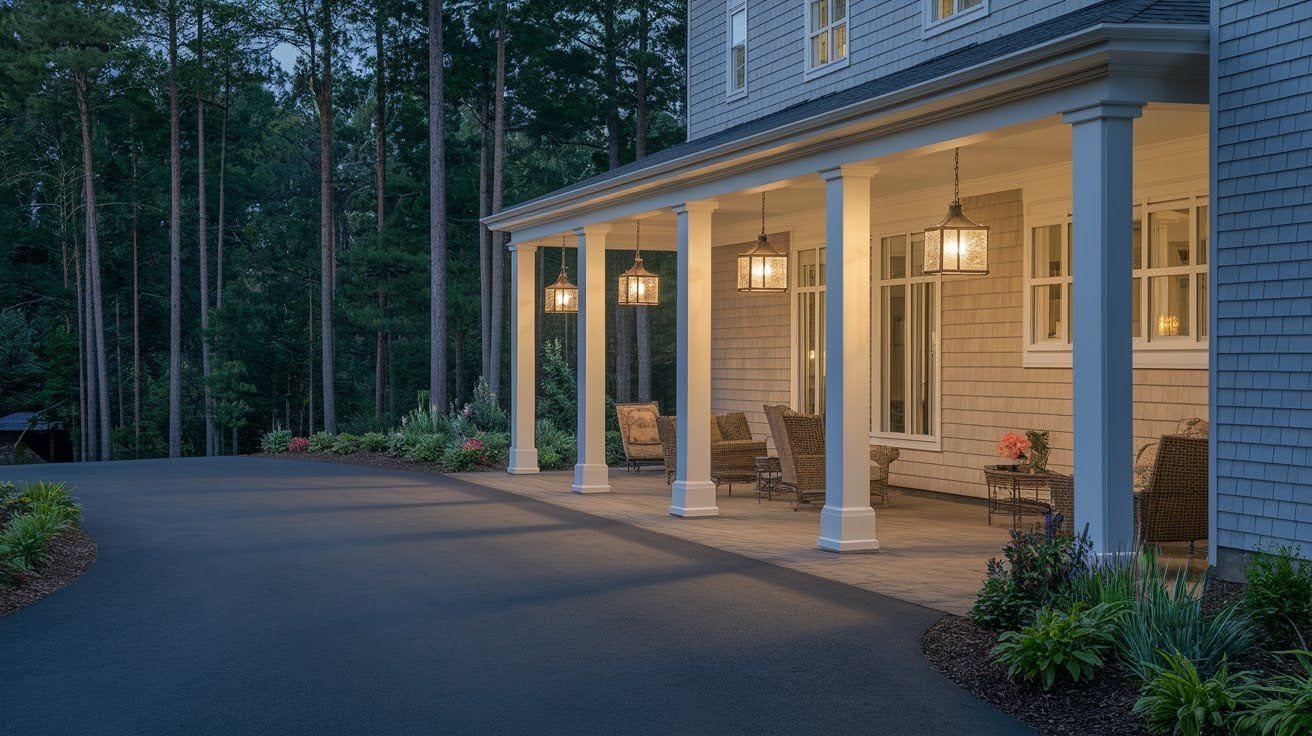
If your driveway leads to a covered porch or breezeway, pendant lights hang down to create a room-like feel. These work especially well in areas where you stand to unlock doors or unload groceries. The light comes from above, right where you need it.
Choose pendants rated for wet or damp locations depending on your coverage. Wet-rated fixtures handle direct rain, while damp-rated ones work under overhangs. Glass or metal shades work better outdoors than fabric.
Size matters with pendants. Measure your covered area and choose fixtures that fit the scale. A small pendant in a large space seems lost, while an oversized one in a small area feels overwhelming.
In-Ground Uplights
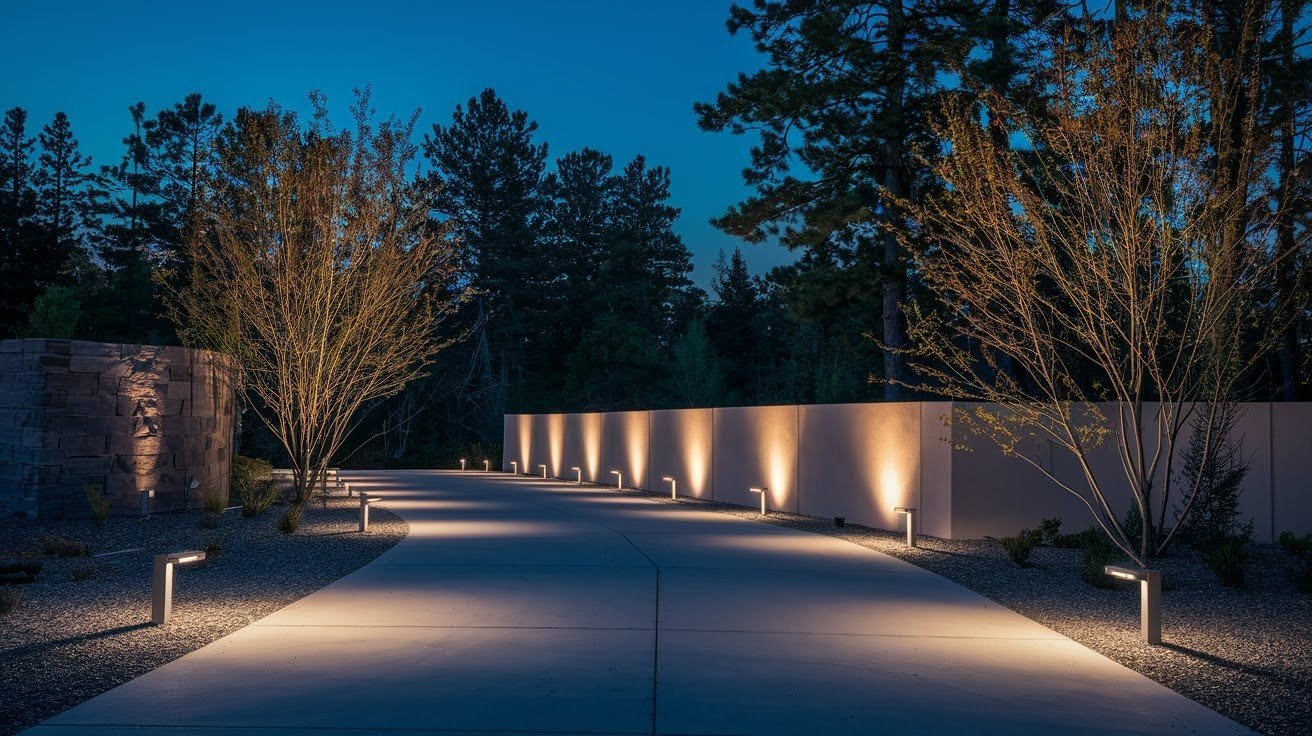
In-ground lights sit flush with your driveway or landscaping and shoot light upward. Point them at trees, walls, or architectural features near your entrance. This technique draws eyes to what you want people to see.
These fixtures need proper installation to avoid water damage. They must be rated for ground burial and installed with correct drainage. The extra effort pays off with a clean seam since you barely see the fixtures themselves.
Use uplights sparingly to avoid overdoing it. Two to four well-placed uplights create drama without turning your entrance into a stadium. They work best highlighting one or two key features rather than lighting everything.
Driveway Edge Rope Lights
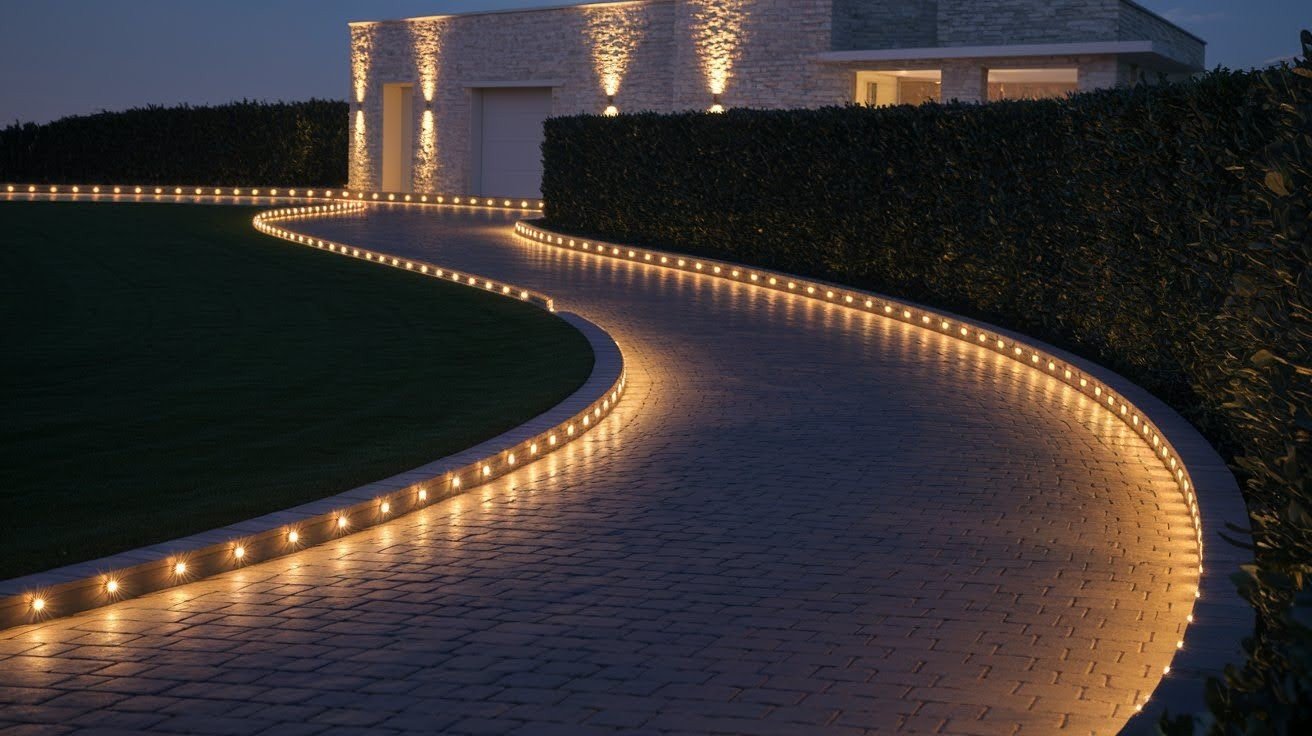
LED rope lights run along the edge of your driveway in a continuous line. They’re flexible enough to follow curves and turns. The steady line of light clearly shows where the pavement ends and the lawn begins.
Installation involves securing the rope in a channel or clips along your driveway edge. Some systems let you cut the rope to exact lengths, while others come in fixed sizes. Waterproof versions stand up to rain and snow.
Rope lights use very little power, especially LED versions. They can run all night without costing much. Some come with color-changing options, though white or warm white works best for driveway entrance lighting ideas that seem good year-round.
Lantern-Style Post Lights
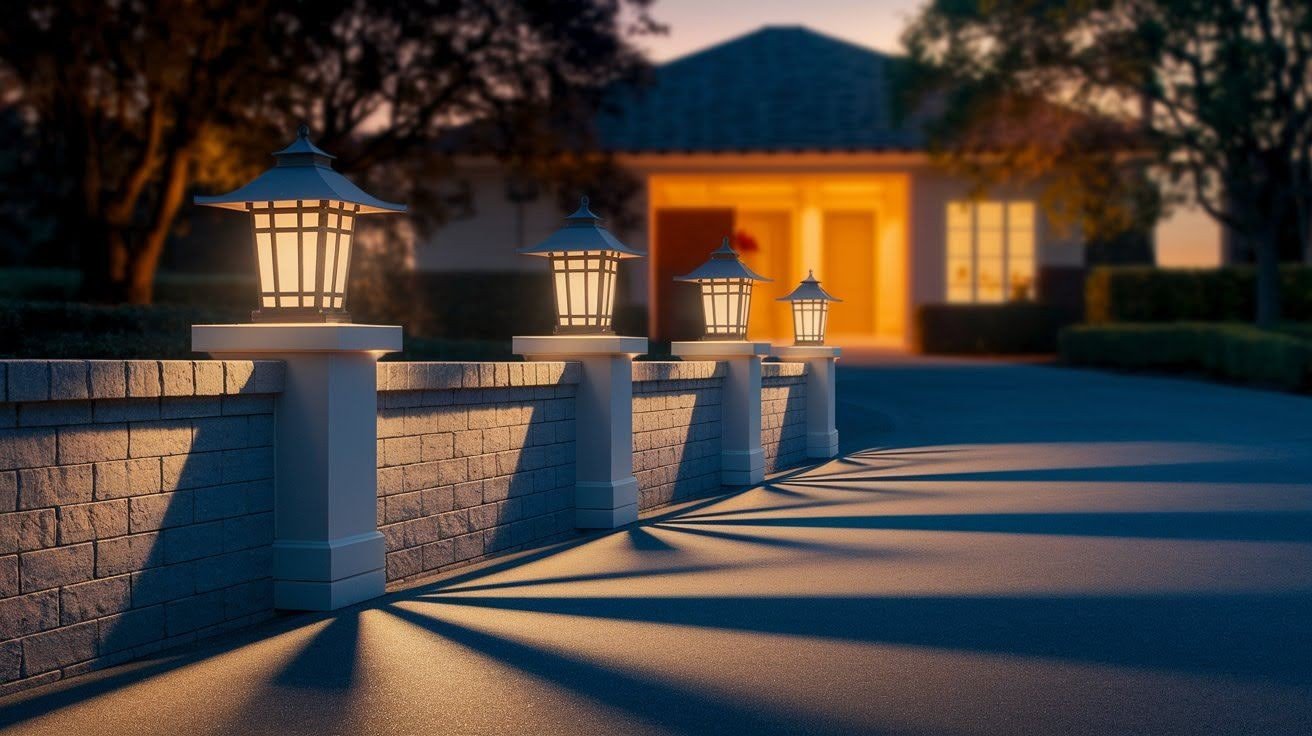
Traditional lantern posts at your driveway entrance announce your home with classic style. These taller fixtures spread light over a wider area than shorter bollards. They work especially well at the point where your driveway meets the street.
Modern versions often include LED bulbs and photocells that turn lights on at dusk. You can find styles from colonial to craftsman to contemporary. Pick one that matches your home’s seem.
Consider the height carefully. Posts that are too tall might need permits or could be hit by tall vehicles. Most residential lantern posts range from 6 to 8 feet tall, which lights the area without towering over your landscape.
Lighting Placement Strategies
Where you put lights matters as much as which lights you choose.
- Space bollards 6-8 feet apart along driveway edges to create a clear boundary without over-lighting
- Place lights at decision points where drivers need to see curves, turns, or where to park
- Light both sides of your entrance evenly so one side doesn’t seem darker than the other.
- Put the brightest light at your main entry point to draw attention where you want people to go.
- Keep lights at least 10 feet from the street to avoid blinding drivers passing by.
- Avoid lighting your neighbor’s property by choosing fixtures that direct light down and toward your hhomeStart with the corner and endpoint lights to mark the overall area, then fill in the middle if needed.
- Consider your home’s sightlines and place lights where you’ll see them from windows when you pull in.
- Test positions with temporary lights before installing permanent fixtures to make sure you like the effect
Conclusion
A well-lit driveway entryway defines a welcoming entry to your home after dark. Fixtures can be used to highlight steps, curbs, paths, and more as a feature of your property rather than merely a functional necessity.
Good wall lights, path lights, and appropriate accents can provide a way for visitors to safely and comfortably find their way around. Some thought can make your house seem inviting in the most important places.
The design ideas and recommendations in this guide will help you create a driveway. It is visually appealing, functional, safe, and convenient for your family and your visitors.
Frequently Asked Questions
What is the best type of light for a driveway entrance?
LED bollards or wall-mounted sconces work best for most homes because they provide steady, energy-efficient light. Choose fixtures rated for outdoor wet conditions that direct light downward.
How bright should driveway entrance lights be?
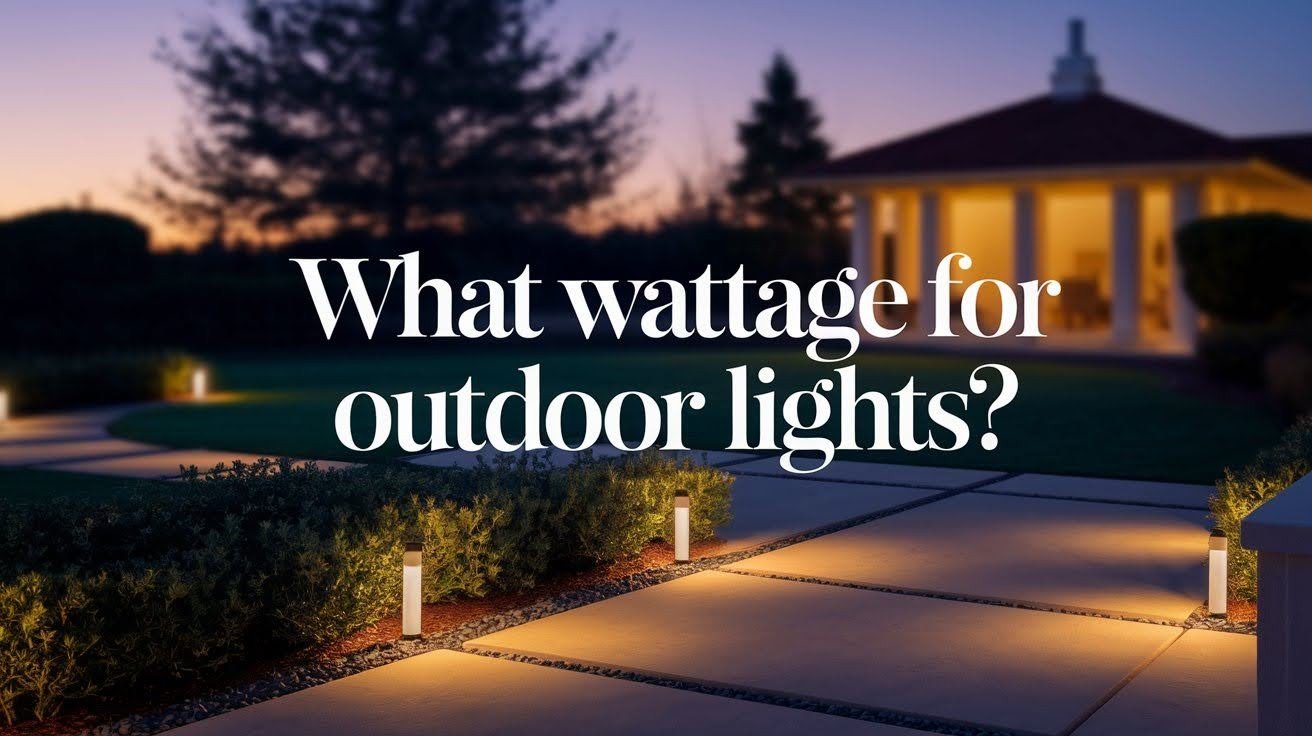
Aim for 50-100 lumens per fixture for path lighting and 100-200 lumens for entry focal points. You want enough light to see clearly without creating glare that blinds you when driving. Dimmer lights along edges with brighter lights at key spots create the best balance.
Do I need an electrician to install driveway lights?
Low-voltage systems don’t require an electrician since they plug into standard outlets through a transformer. Line voltage systems need licensed electrical work. Solar lights need no wiring at all.
How far apart should I space driveway lights?
Space path lights and bollards 6-8 feet apart for continuous coverage along driveway edges. Place brighter accent lights or wall sconces 10-15 feet apart. Adjust spacing based on fixture brightness. Dimmer lights need closer spacing.
Are solar driveway lights bright enough for safety?
Modern solar LED lights provide adequate brightness for most driveway entrance lighting ideas when placed correctly. They work best in areas with direct sun exposure during the day. For maximum security or very dark areas, plug-in low-voltage lights offer more.