
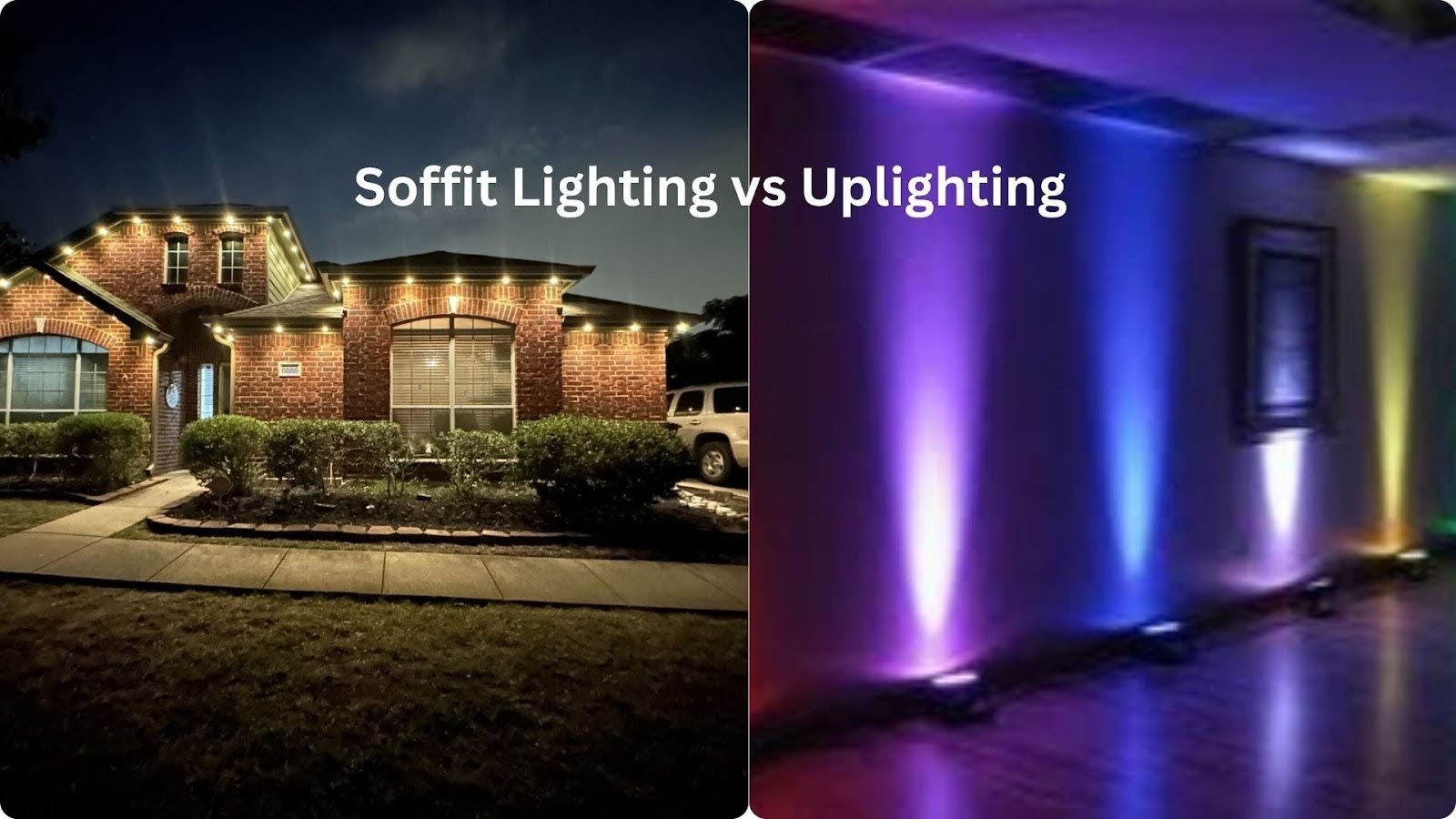
In this blog, I will share the key differences between soffit lighting vs uplighting and how each can change the look and feel of your home. Soffit lights shine downward, offering bright and focused illumination.
They are used in kitchens, bathrooms, and other spaces where a broad area needs diffused illumination. Uplighting uses diffuse light reflected off walls and the ceiling. They are a great choice for soft light within spaces like living rooms or bedrooms.
Know how soffit lights illuminate homes and how uplights illuminate. Good lighting designers think about how to balance natural and artificial light. It also includes the quality of what generates that light and placement within a comfortable home.
What Is Soffit Lighting (Downlighting)?
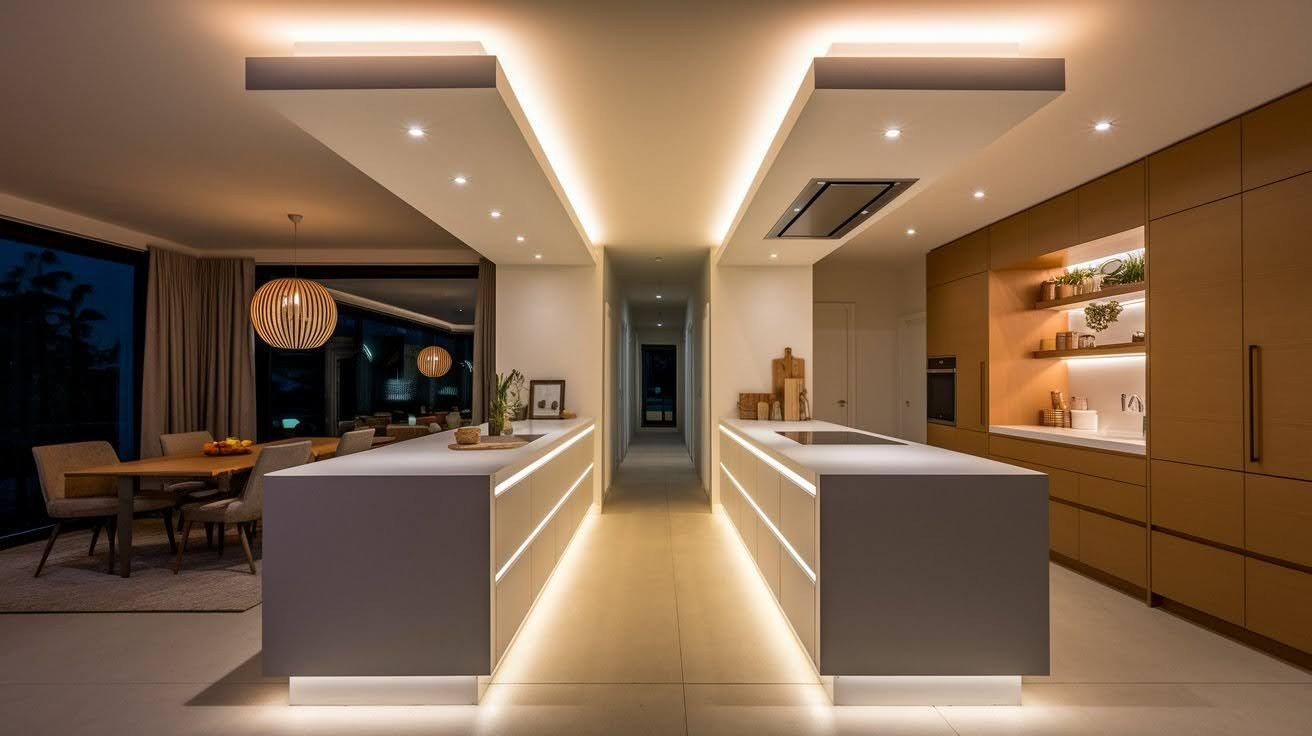
Soffit lighting is the traditional way most people light their homes. These fixtures sit in your ceiling or under cabinets and point light straight down onto the floor or countertop. You see them everywhere in kitchens, bathrooms, and hallways.
This type of lighting is direct and focused. It puts light exactly where you need it for specific tasks. When you’re chopping vegetables or reading a book, soffit lighting gives you the bright, clear light you need to see what you’re doing.
The main benefit is its practicality. Soffit lights are reliable, easy to understand, and do their job well. They’ve been the standard for decades because they work, especially in areas where you need to see details clearly.
What Is Uplighting?
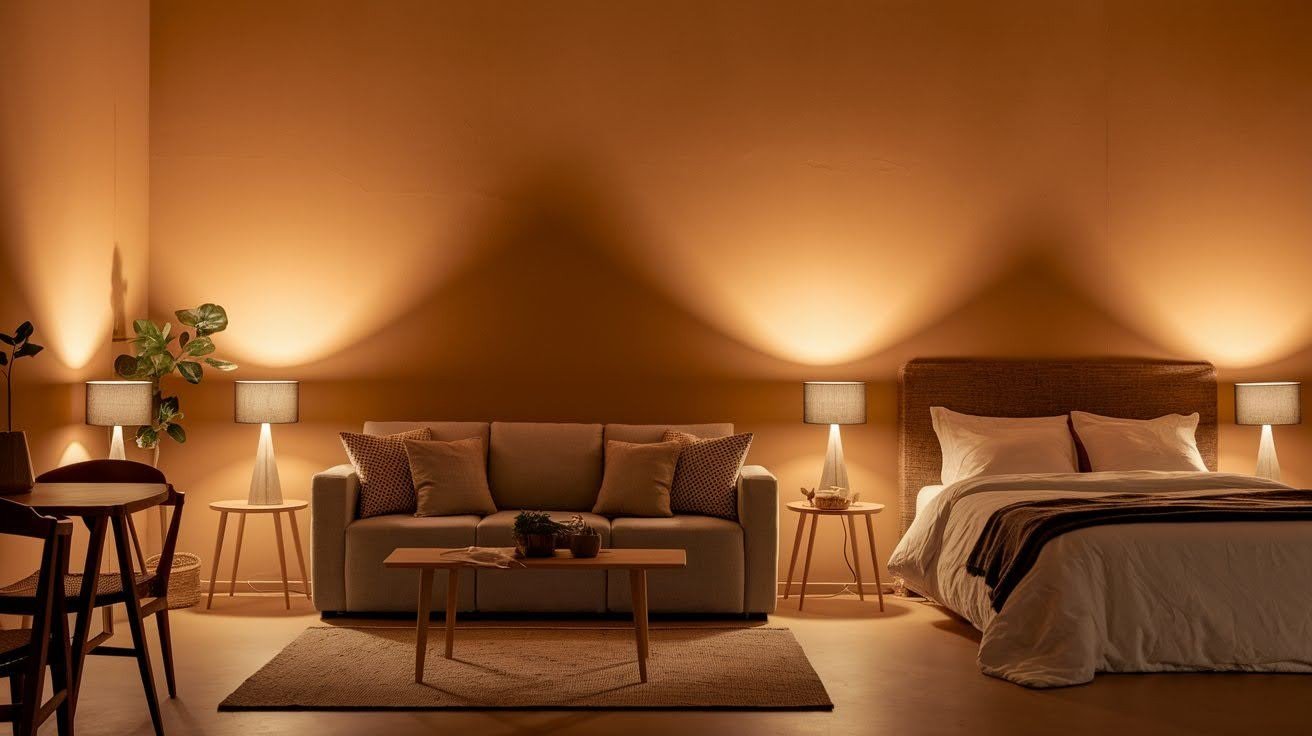
Uplighting flips the traditional approach on its head. Instead of pointing down, these lights sit near the floor or on walls and shine upward. The light hits your ceiling and walls, then bounces back down to fill the room with a soft, even glow.
This method creates what lighting experts call “indirect lighting.” You’re not looking directly at the light source, so there’s no glare or harsh brightness. The ceiling becomes like a giant reflector that spreads light evenly throughout the space.
People love uplighting for living rooms, bedrooms, and dining areas. It makes these spaces feel warm and relaxing without the clinical feel of overhead lights. Once you experience it, you’ll understand why it’s becoming more popular in modern homes.
Understanding the Core Difference Between Soffit Lighting and Uplighting
The main difference is simple: direction. Soffit lighting shines down, while uplighting shines up. This might sound basic, but it changes everything about how a room looks and feels.
When comparing soffit lighting vs uplighting, think about how you experience each one. Downlighting is like a spotlight, direct and focused. Uplighting is like the glow from a fireplace, soft and spread out. Both have their purpose, but they create completely different moods.
Your choice depends on what you’re trying to achieve in each room. Do you need focused light for tasks, or do you want to create a relaxing atmosphere? Understanding this core difference helps you pick the right option for each space in your home.
| Feature | Soffit Lighting (Downlighting) | Uplighting |
| Direction of Light | Shines downward from the ceiling or overhangs | Shines upward toward the ceiling and walls |
| Typical Placement | Kitchens above counters, bathrooms over sinks, hallways, closets, and artwork | Corners of living rooms, behind sofas, along bedroom walls, flanking architectural features, behind plants or sculptures |
| Effect on Mood | Bright, focused, great for tasks, makes details stand out | Soft, ambient, spreads glow, creates cozy, relaxing atmosphere |
| Flexibility | Usually fixed, changes require reinstalling | Highly flexible, floor or adjustable wall uplights can be moved or angled easily |
| Ceiling Height Suitability | Works well in lower ceilings to avoid glare | Best in medium to high ceilings for maximum reflection and effect |
| Energy and Maintenance | Often LED, long-lasting, energy-efficient | LEDs are common, low-maintenance, and easy to experiment with placement |
| Homeowner Tip | Perfect for task-focused areas like kitchens, one homeowner loves using it over their bathroom vanity for clear lighting | Great for highlighting features or creating mood, another homeowner found uplighting behind a textured wall completely transformed their living room vibe |
Side-by-Side Visual Comparison
| Feature | Soffit Lighting (Downlighting) | Uplighting |
| Light Direction | Straight down from the ceiling | Upward toward the ceiling and walls |
| Light Quality | Direct, focused beam | Soft, diffused glow |
| Shadow Creation | Creates dark shadows below objects | Minimizes harsh shadows |
| Room Perception | Can make ceilings feel lower | Makes ceilings appear higher |
| Glare Factor | It can cause glare when looking up | No direct glare to the eyes |
| Visual Effect | Highlights what’s on surfaces | Highlights architectural features |
| Space Feel | Can feel smaller and more confined | Makes spaces feel larger and open |
| Best for Mood | Practical, task-oriented | Relaxing, ambient |
Room-by-Room Recommendations
Choosing the right lighting for each room can completely change how comfortable and inviting your home feels. Here’s a simple guide to get it just right:
- Living Room and Dining Area: Use uplighting as your main light to create a warm, welcoming space. Add table or floor lamps in reading corners, and use dimmers for movies, dinners, or game nights.
- Bedroom: Gentle uplighting helps set a relaxing mood at night. Add bedside lamps with downward shades for reading, and keep closet lighting bright with soffit-style fixtures.
- Kitchen: Combine both types of under-cabinet soffit lights for meal prep and uplighting above cabinets or walls for a soft glow. Pendant lights can provide both up and down lighting.
- Bathroom: Use soffit lighting over vanities and showers for safety and clear visibility. If space allows, add a corner uplight for a spa-like feel during baths.
- Home Office: Place task lighting at your desk and add uplighting behind you to reduce screen glare. This keeps your workspace bright but comfortable for long hours.
- Hallways: Install soffit lights for safe navigation, and add uplights at the ends or corners to make the space feel more open.
- Entryway: A mix of uplighting near walls and soft overhead lights makes your entrance welcoming while highlighting key decor.
- Closets and Storage: Soffit lighting ensures you see everything clearly, while small uplights can make walk-in closets feel less cramped.
- Multipurpose Rooms: Combine uplighting for general ambiance and task lighting where needed, perfect for craft rooms, play areas, or media rooms.
Cost Comparison: Uplighting vs. Soffit Lighting
Understanding the costs upfront helps you plan your home lighting upgrade without surprises.
| Cost Factor | Soffit Lighting (Downlighting) | Uplighting |
| Initial Installation | $100-$300 per fixture (hardwired recessed) | $30-$200 per fixture (wide range of options) |
| Electrical Work | Usually requires an electrician ($200-$500+) | Many plug-in options (minimal or no electrician cost) |
| Fixture Costs | $25-$150 per fixture | $30-$250 per fixture |
| LED Bulbs | $8-$25 per bulb | $10-$30 per bulb |
| Monthly Energy Cost | $2-$5 per fixture (based on 4hrs/day) | $1-$3 per fixture (typically lower wattage) |
| Bulb Lifespan | 15-25 years (LED) | 15-25 years (LED) |
| Maintenance | Rare, may need ceiling patching if relocated | Easy, portable options need no maintenance |
| Total First-Year Cost | $150-$400 per fixture | $50-$250 per fixture |
| 10-Year Operating Cost | $240-$600 per fixture (energy + maintenance) | $120-$360 per fixture (typically lower) |
Conclusion
Soffit lights and uplighting are generally used for different purposes in a house: the former provides task lighting for the workspace. Uplighting provides a soft and calm light. Uplighting joins with other lights to layer light, giving form and function.
The increased amount of light from windows can make a room seem larger. Proper placement can improve safety. Quality fixtures and bulbs can reduce energy use and maintenance. Each of these has advantages and disadvantages relative to the other options for the room’s height, its size, and the work to be done.
Choosing between soffit lighting and uplighting based on how effective they are for different room heights, and how they make you feel (and perform), creates a comfortable, inviting, well-designed home.
Frequently Asked Questions
Can You Use Uplighting and Soffit Lighting in the Same Room?
Yes, combining both types creates the most flexible and functional lighting. Use uplighting for general ambiance and comfort, then add soffit lights over areas where you need focused task lighting. This layered approach works perfectly in kitchens, bathrooms, and home offices.
Does Uplighting Use More Electricity Than Soffit Lighting?
No, uplighting typically uses the same or less electricity, especially with LED fixtures. Both types can be energy-efficient with modern LED bulbs. Uplighting often needs fewer fixtures and lower wattage to light a room effectively because the reflected light spreads efficiently.
What Type of Ceiling Works Best for Uplighting?
Light-colored, smooth ceilings reflect light best and create the most effective uplighting. White or light beige ceilings work perfectly. Textured ceilings still work, but may create interesting shadow patterns. Dark ceilings absorb light and reduce uplighting effectiveness significantly.
Is Uplighting Good for Rooms With Low Ceilings?
Yes, uplighting actually helps low ceilings feel higher by drawing your eye upward. The light on the ceiling creates visual interest and makes the room feel more open. This is one of uplighting’s biggest advantages in homes with standard 8-foot ceilings.
How Many Uplights Do You Need Per Room?
Most rooms need 2-4 uplights, depending on size and desired brightness. A small bedroom might need just one or two corner uplights. Large living rooms typically need 3-4 fixtures spread around the space. Start with fewer fixtures and add more if needed.