
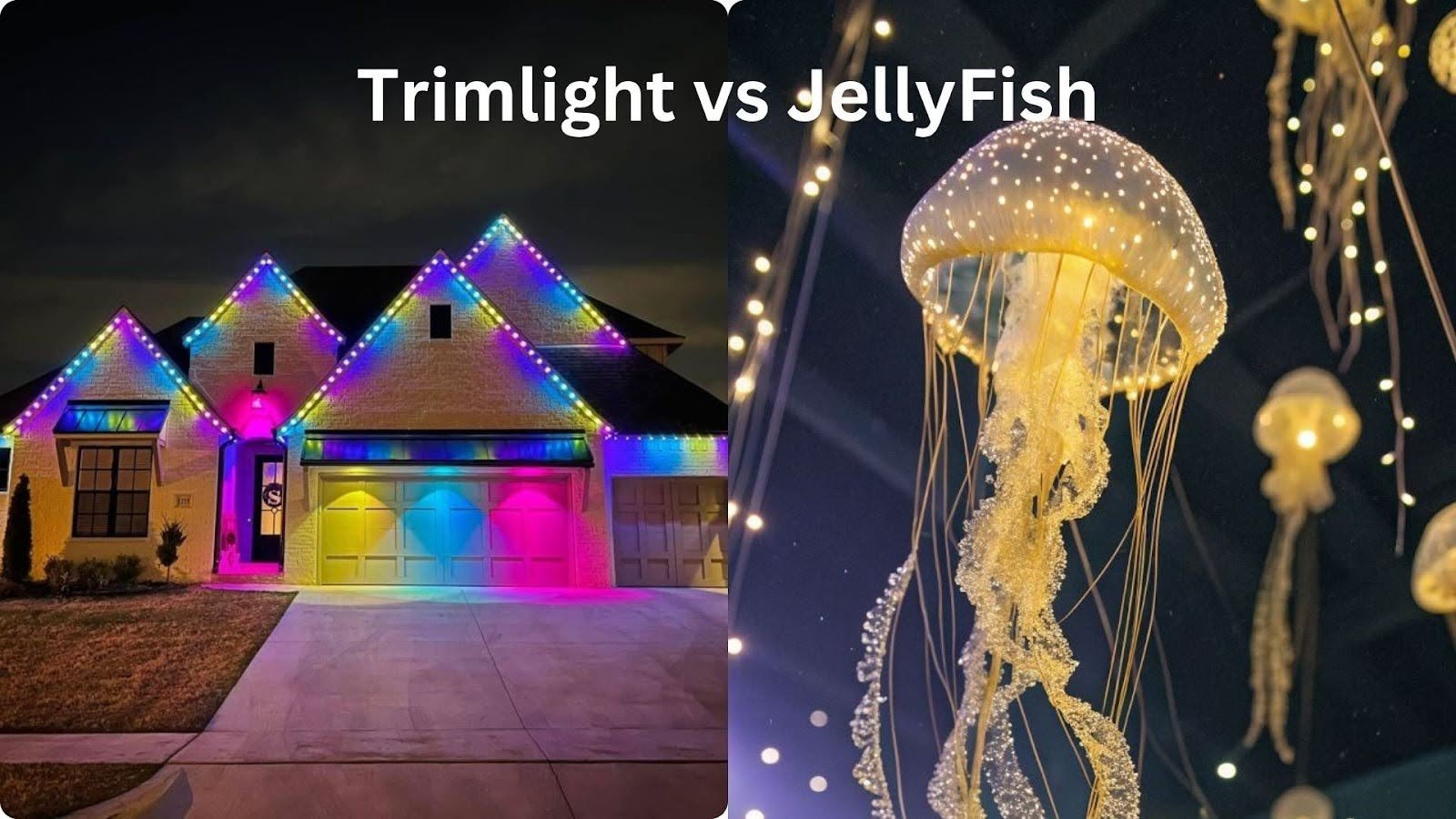
Are you tired of putting up holiday lights every year? Permanent outdoor lighting is changing the game for homeowners. Two big names keep coming up: Trimlight and JellyFish.
The trimlight vs jellyfish debate has homeowners asking tough questions. Which system lasts longer? Which one saves more money? Which looks better on your home?
This guide breaks down everything you need to know. We’ll compare warranties, costs, features, and real homeowner experiences. By the end, you’ll know exactly which system fits your needs.
What is Trimlight?
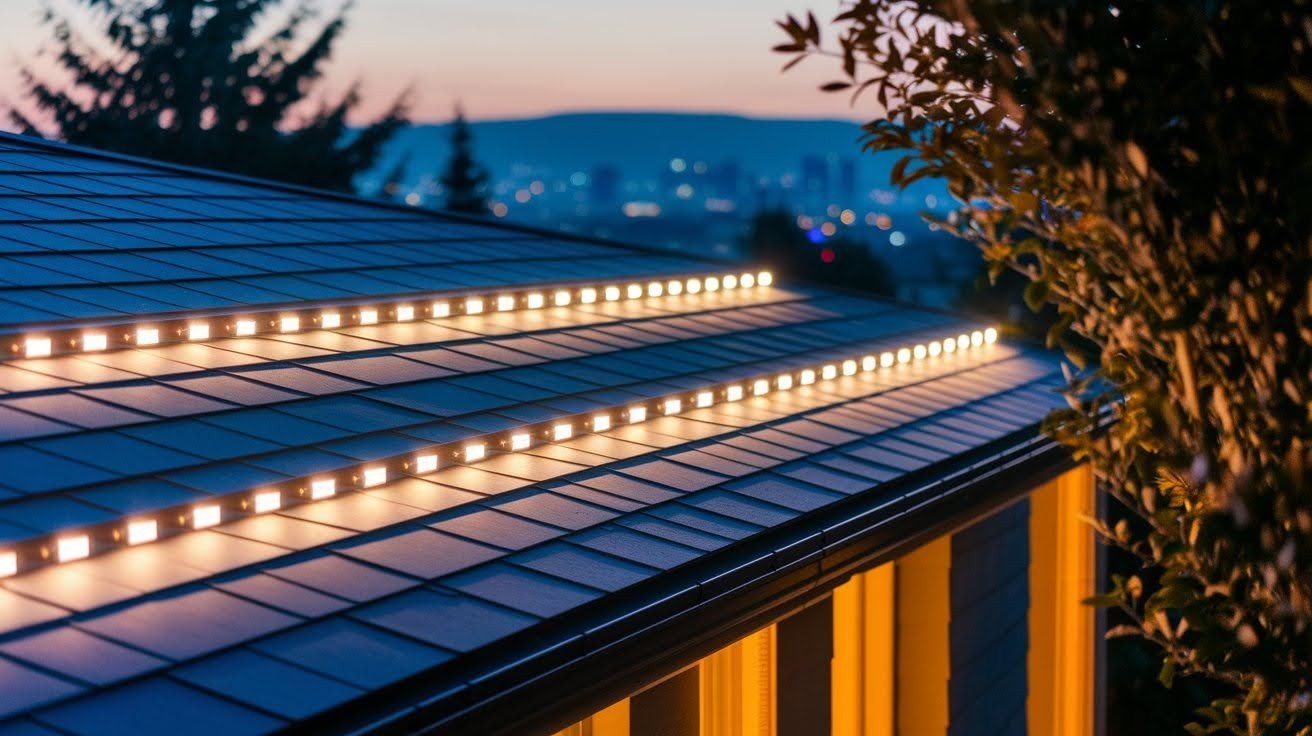
Trimlight is a permanent outdoor lighting system installed by trained professionals. The lights stay on your home year-round and can change colors for any holiday or occasion. You control everything from your phone.
The system uses a 12-volt power supply with LED lights mounted along your roofline. Each light can show over 16 million color options. Trimlight offers three different bulb styles to match your home’s look.
The company has been in business since 2012 and focuses on quality over quick installation. Every system comes with a lifetime product warranty. Professional installers handle the entire setup process.
What is JellyFish?
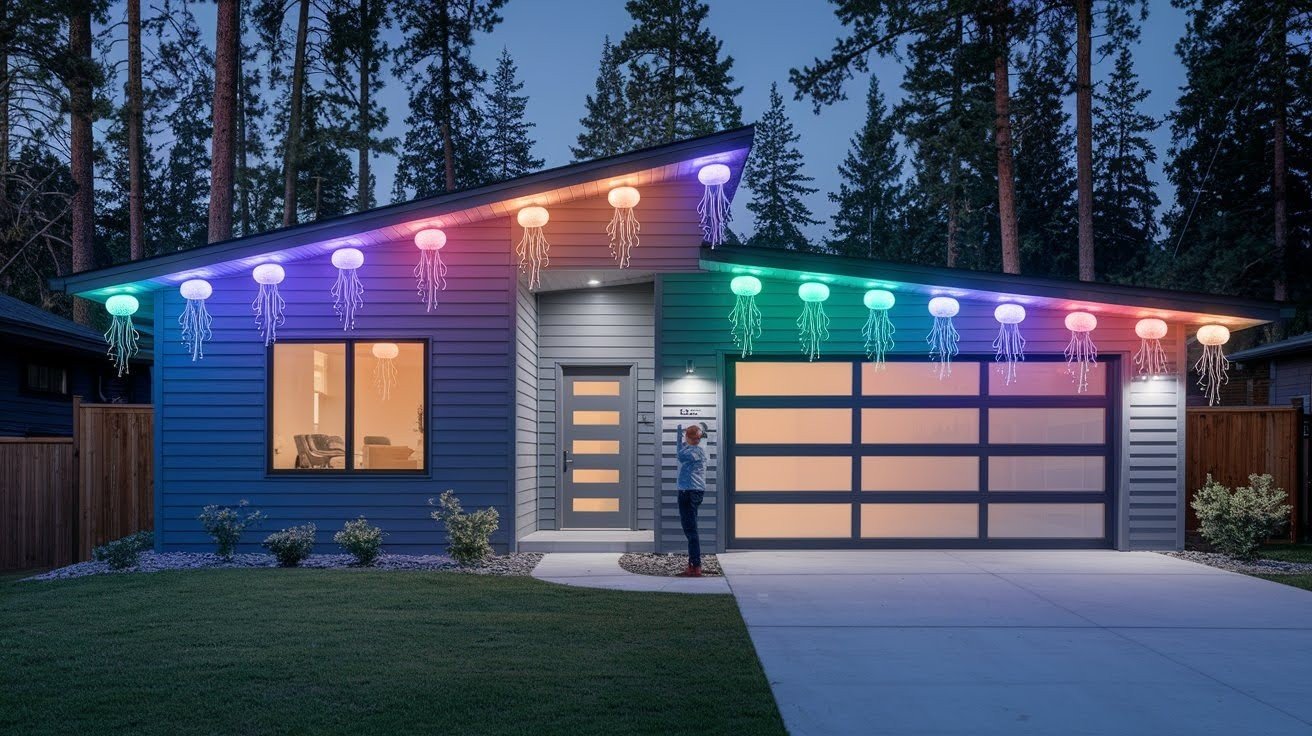
JellyFish is another permanent lighting system that’s popular with DIY homeowners. The company sells kits that you can install yourself or hire someone to put up. The lights work similarly to Trimlight with app controls.
JellyFish uses a 48-volt system with puck-shaped lights that sit flatter against your home. The company started more recently and has built a following among cost-conscious buyers. Their systems come with a 5-year warranty.
The main appeal is the lower upfront cost compared to professional systems. Many homeowners choose JellyFish to save money on installation. The company provides installation guides and support for DIY projects.
Trimlight vs JellyFish: Which is Better for Your Home?
Budget plays a role, but don’t ignore long-term value. Cheaper systems might cost more over time if they need replacing. Professional installation might save you headaches and mistakes.
| Feature | Trimlight | JellyFish |
| Warranty | Lifetime | 5 Years |
| LED Hours | 50,000 | 30,000 |
| Voltage | 12V | 48V |
| Bulb Options | 3 Types | 1 Type |
| Color Channels | 50+ | 21 |
| Patterns | 180+ | 100+ |
| Installation | Professional Only | DIY or Professional |
| Labor Warranty | 1+ Year (Dealer) | 1 Year |
| Music Sync | Yes | No |
| Winner | Long-term value, customization, warranty | Lower upfront cost |
Advantages of Trimlight and Jellyfish
Both Trimlight and Jellyfish offer unique benefits for outdoor lighting, making your home look impressive while enhancing functionality.
| Advantage | Trimlight | Jellyfish |
| Customizable Colors | Offers a wide range of colors and effects. | Also provides vibrant, programmable colors. |
| Durability | Built to withstand harsh weather conditions. | Durable design suitable for outdoor use. |
| Energy Efficiency | Uses low-energy LEDs for cost savings. | LED technology ensures long-lasting efficiency. |
| Ease of Control | Controlled via app or remote with presets. | App-controlled with easy scheduling options. |
| Attract Curb Appeal | Creates a polished, professional look. | Adds fun, creative lighting to your exterior. |
Disadvantages of the Trimlight and Jellyfish
While both Trimlight and Jellyfish offer practical lighting solutions, they come with certain drawbacks that potential buyers should consider:
| Disadvantage | Trimlight | Jellyfish |
| High Upfront Cost | Requires professional installation, leading to higher initial expenses. | Higher price point professional installation needed. |
| Energy Consumption | Continuous use can increase electricity bills despite LED efficiency. | Potentially higher energy consumption if used year-round. |
| Limited Color Options | Some models may lack certain color temperatures, like warm white. | Limited color options lacks a warm white setting. |
| Maintenance Needs | May require professional assistance for repairs and maintenance. | Requires professional installation repairs may need expert help. |
| Design Flexibility | Once installed, design changes are difficult and costly. | Design changes post-installation can be challenging. |
Tips for Choosing Permanent Outdoor Lighting
Making the right choice now saves money and frustration later
- Don’t just look at purchase price. Add installation, potential replacements, and repair costs over 20 years. A system needing replacement in 10 years costs more than one lasting 20+ years. Include warranty value in your calculations.
- Know your exact linear footage before getting quotes. This affects bulb count and total system cost. Most homes need 150-300 feet of coverage. Accurate measurements prevent surprise costs later.
- Some homeowner associations restrict permanent exterior lighting. Others require approval before installation. Get written permission before buying anything. This prevents expensive removal situations.
- Both systems need app management and basic troubleshooting. Rate your comfort with technology honestly. Professional support matters more if you’re not tech-savvy. Factor this into your decision.
- Larger homes might need wider bulb spacing to control costs. Traditional homes might look better with protruding bulbs. Modern homes might prefer flat puck designs. Match the system to your home’s character.
- Permanent lighting systems add value, but buyers have preferences. Lifetime warranties transfer to new owners. Systems with expired warranties add less value. Think beyond your current ownership period.
- Compare at least three installers if going with Trimlight. Check their work in person if possible. Read reviews from customers who’ve had systems for 3+ years. Long-term performance matters most.
- Find out response times for warranty claims. Learn who handles repairs and replacements. Understand what happens if your dealer goes out of business. Service after installation matters as much as the system itself.
- Most dealers will demo the control app for you. Test how easy it is to change colors and patterns. See if the interface makes sense to you. You’ll use this app regularly, so it should be simple.
Conclusion
The trimlight vs jellyfish decision comes down to priorities. Trimlight wins on warranty length, customization options, and professional installation. JellyFish costs less upfront and allows DIY installation.
For long-term value, Trimlight’s lifetime warranty provides serious advantages. You avoid replacement costs and repair worries. The extra customization features give you more creative control over your displays.
Choose JellyFish if you need lower initial costs and enjoy DIY projects. Pick Trimlight if you want maximum protection and don’t mind paying more upfront. Either system beats hanging lights every year.
Frequently Asked Questions
How long do Trimlight and JellyFish systems actually last?
Trimlight systems last 20-30 years with normal use thanks to 50,000-hour LEDs and a lifetime warranty. JellyFish offers 30,000 hours with 5-year coverage, lasting 10-15 years typically before needing replacement or repairs.
Can I install either system myself to save money?
JellyFish allows DIY installation with provided instructions and support. Trimlight requires professional installation by certified dealers. DIY saves money but risks voiding warranties and requires significant time and skill.
Which system offers better color options and customization?
Trimlight provides 50+ color channels and 180+ patterns with three bulb options. JellyFish offers 21 color channels and 100+ patterns with one bulb style. Both allow custom pattern creation through apps.
What happens when the warranty expires on JellyFish?
After 5 years, you pay for all repairs and component replacements yourself. This includes LEDs, controllers, and wiring issues. Costs vary but can reach hundreds or thousands, depending on the problem.
Does the voltage difference really matter for performance?
Trimlight’s 12-volt system produces less heat, helping LEDs last longer. JellyFish’s 48-volt system can show color variations on larger homes. Both use similar electricity, but heat management affects long-term performance.