
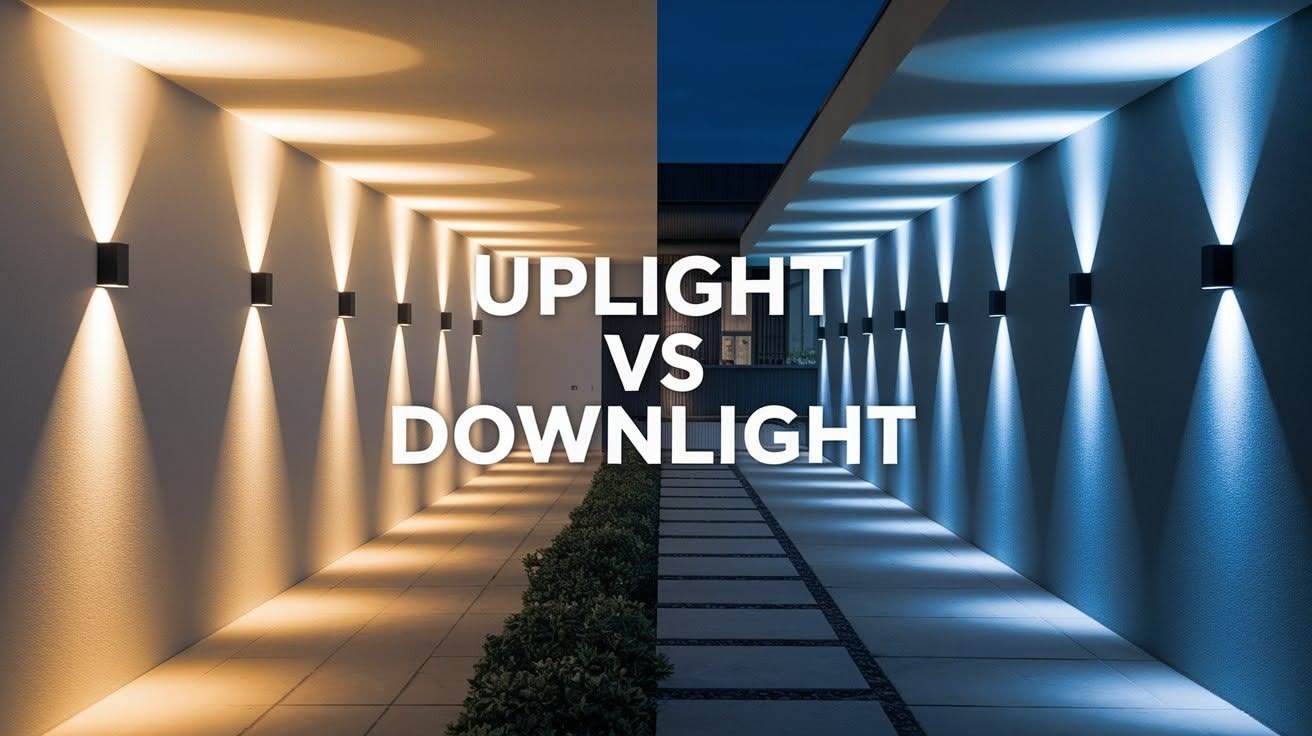
You know that feeling you get when you first walk into a room and love it since the minute you set foot inside? It’s probably the lighting. Lighting is particularly important to the space’s feel.
A knowledge of the difference between uplight and downlight is an important skill for designers, electricians, and homeowners, because it affects your mood, your productivity, and your energy bill.
In this guide, we’ll walk you through the differences between the various types of lighting, when to use each, and which light fixture type to choose for each room in your home so you can choose with confidence.
Uplighting vs Downlighting: The Key Differences Explained
When you’re choosing between uplight vs downlight, you’re really deciding where you want the light to go and what feeling you want to create in your space.
What is Uplighting?
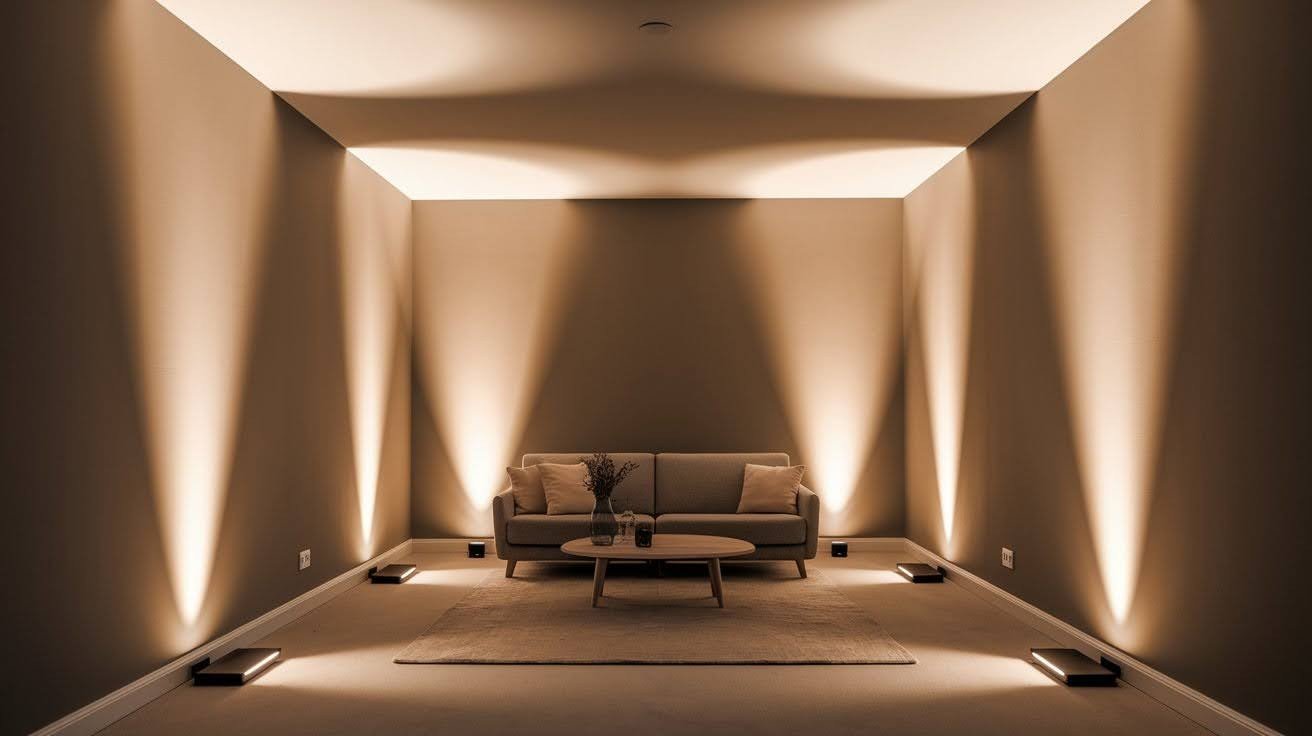
Uplighting uses fixtures placed low on the ground or mounted near floor level that send light upward toward the ceiling and walls. This creates a soft, gentle glow that fills your room without being too bright or harsh.
The light bounces off your ceiling and spreads out naturally across the space. This gives you a warm, comfortable feeling that makes rooms seem bigger and more open. You’ll often see this in living rooms, hotels, and restaurants where the goal is to help people relax.
Uplighting works optimally when you have light-colored ceilings that can reflect the light down. Dark ceilings will absorb too much light and make the effect less useful. Think about this before you install any upward-facing lights in your home.
What is Downlighting?
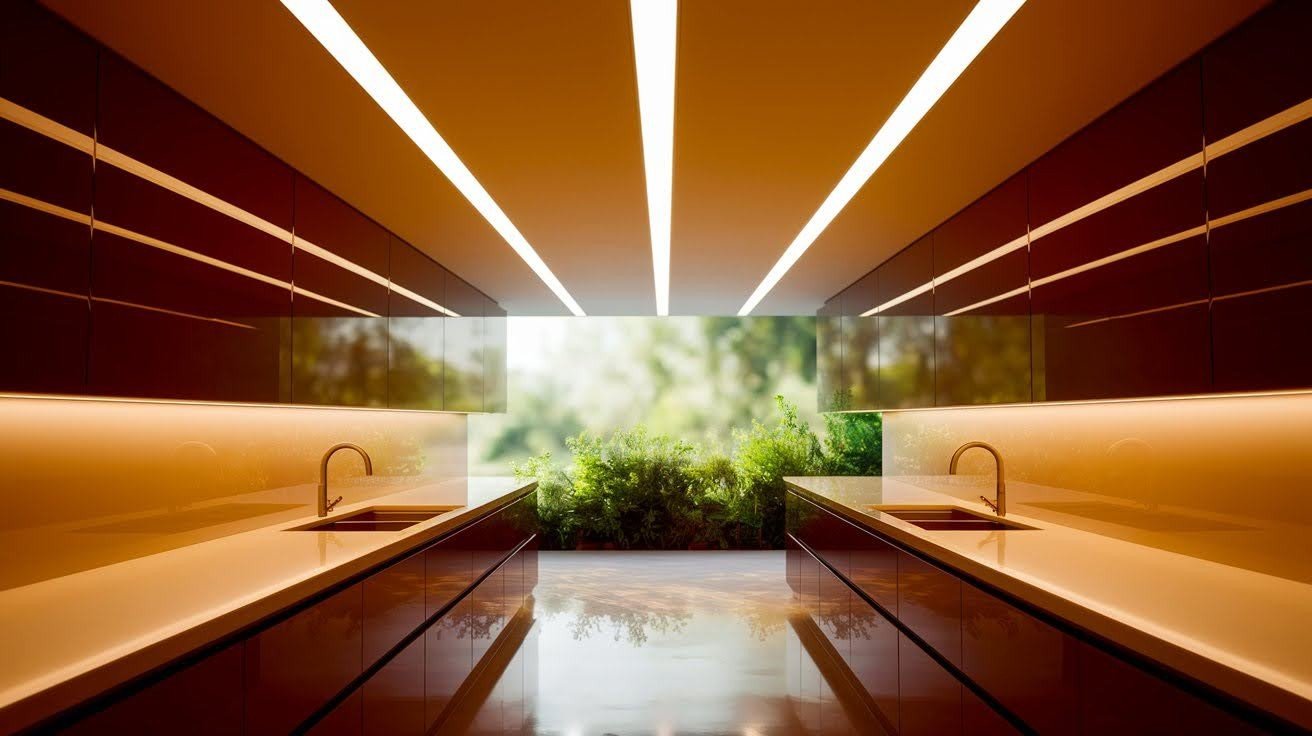
Downlighting is what most of us grew up with, lights mounted on the ceiling or high on walls that point down toward the floor. This is the most common type of lighting in homes because it’s practical and gets the job done.
These fixtures send focused light exactly where you need it. When you’re cooking, reading, or working on a project, downlighting gives you clear, bright illumination that helps you see what you’re doing. Most ceiling lights, recessed fixtures, and pendant lights use this approach.
You’ll find downlighting everywhere from kitchens to bathrooms to offices. It’s reliable, easy to install, and works well for daily tasks. The main benefit is that it lights up surfaces and objects clearly so you can work safely and comfortably.
When to Use Each?
Here’s a quick guide to help you decide when uplighting or downlighting works optimally in different spaces
Use Uplighting When:
- You want to highlight tall walls, columns, or high ceilings
- You’re trying to create a relaxed, comfortable mood
- You need to add visual interest to plain architectural features
- You want to make a small room feel more spacious
Use Downlighting When:
- You need bright light for cooking, reading, or working
- You want functional lighting for everyday tasks
- You’re lighting pathways, stairs, or outdoor walkways
- You need to see details clearly and avoid accidents
Pros and Cons of Uplighting
Uplighting brings a unique quality to your space that can completely change how a room feels, but it’s not right for every situation.
| Pros of Uplighting | Cons of Uplighting |
| Creates a warm, inviting ambiance by casting light upward onto walls and ceilings. | It can create glare or uneven lighting if fixtures are poorly placed. |
| Highlights architectural features, artwork, plants, or textured walls. | It may not provide enough task lighting for reading or detailed work. |
| Makes small rooms feel taller and more spacious by drawing the eye upward. | Installation can be more complex than standard downlighting. |
| Softens the overall feel of a room with diffused, indirect light. | It can be less energy-efficient if too many fixtures are used. |
| Offers flexibility for changing moods with adjustable colors and intensity. | Requires careful placement to avoid unwanted shadows or hotspots. |
Pros and Cons of Downlighting
Downlighting is the workhorse of home lighting, providing the bright, focused light most of us rely on every day for practical tasks.
| Pros of Downlighting | Cons of Downlighting |
| Provides bright, focused light ideal for tasks like cooking, reading, or working. | It can create harsh shadows or glare if not properly positioned. |
| Offers a clean, modern look that blends into ceilings seamlessly. | It may make a room feel flat or less cozy due to direct, focused light. |
| Easy to install in most rooms, including kitchens, bathrooms, and hallways. | Limited design impact, doesn’t highlight architectural features as effectively. |
| Works well with dimmers to adjust brightness when needed. | Requires careful spacing to avoid uneven illumination. |
| Energy-efficient with LED options, reducing electricity costs. | Overuse can lead to the “spotlight” effect and reduce ambient ambiance. |
| Minimal maintenance once installed, with long-lasting LED bulbs. | Can feel clinical in spaces intended for relaxation or atmosphere. |
Tips for Perfect Uplighting and Downlighting
Getting your uplight vs downlight balance right can make or break your space, so here are nine practical tips to help you make smart lighting choices.
- Layer your lighting: Mix uplighting and downlighting together for optimal results. Use downlights for tasks and uplights for atmosphere. This gives you flexibility and makes rooms more interesting.
- Consider ceiling height: Uplighting works optimally with ceilings 9 feet or higher. Lower ceilings don’t give light enough room to spread out before it bounces back down. Downlighting works well at any height.
- Choose the right color temperature: Warm white bulbs (2700-3000K) work well for living spaces and uplighting. Cool white bulbs (4000K+) are better for task areas and downlighting in workspaces.
- Use dimmers whenever possible: Dimmers let you adjust light levels based on time of day and activity. This makes both uplighting and downlighting more versatile and helps you save energy.
- Think about fixture placement: Keep uplights at least 6-12 inches from walls to avoid hot spots. Space downlights 4-6 feet apart in most rooms to avoid dark patches between fixtures.
- Match lighting to room function: Active rooms like kitchens need more downlighting. Relaxation rooms like bedrooms benefit from more uplighting. Let the room’s purpose guide your choices.
- Pay attention to reflective surfaces: Light-colored walls and ceilings work better for uplighting because they bounce light back into the room. Dark surfaces absorb light and reduce effectiveness.
- Don’t forget about maintenance: Uplights collect more dust and bugs since they face up. Clean them regularly to keep the light output strong. Downlights stay cleaner, but bulbs may need changing more often.
- Test before you commit: Use temporary lamps or movable fixtures to test different lighting setups before installing permanent fixtures. This helps you avoid expensive mistakes and find the perfect balance.
Conclusion
If you know how uplights and downlights differ, you can decide well about the option that optimally meets your needs uplighting can make an atmosphere and also highlight architectural details. Direct, bright light helps you perform everyday tasks, so use downlighting in those areas.
Consider the ceiling height plus each room’s square footage. Consider the arrangement of your furnishings. You should consider security and safety for outdoor areas first. After that, choose which landscape features to highlight.
LED and smart lighting make design easy. We can design brighter or dimmer uplight and downlight systems for various times of the day. This makes your home more comfortable and usable.
Frequently Asked Questions
Can I use both uplighting and downlighting in the same room?
Yes, combining both types creates the optimal lighting. Use downlighting for tasks and uplighting for atmosphere. This layered approach gives you flexibility and makes rooms more comfortable and functional throughout the day.
Which is more energy efficient: uplight vs downlight?
Downlighting is usually more energy efficient because the light goes directly where you need it. Uplighting can waste energy if ceilings absorb light instead of reflecting it. LED bulbs make both options more efficient than older lighting types.
What’s the optimal uplight vs downlight ratio for living rooms?
A good starting point is 60% downlighting and 40% uplighting for living rooms. This gives you enough bright light for activities while creating a comfortable atmosphere. Adjust based on your ceiling height and personal preference for brightness levels.
Does uplighting make ceilings look higher?
Yes, uplighting makes ceilings appear higher by drawing your eyes upward and filling vertical space with light. This visual trick works especially well in rooms with white or light-colored ceilings that reflect light down into the space.
Is downlighting better for outdoor security?
Yes, downlighting is better for outdoor security because it lights up pathways, doors, and potential hiding spots. Motion-sensor downlights near entries provide both security and convenience. Uplighting is more about looks than safety in outdoor settings.